
If you want to share, say so!
I took part in the Open Content Licensing for Educators online course that ran all last week. It was run by the team at WikiEducator and was a great insight into the many copyright issues that can be addresses by creating Open Educational Resources using clear and open licensing terms.
I know that many educators don't think in terms of "licensing" their work, but really, whenever you make something that can be used to help either you or others teach, it's a "resource" and the way that you indicate how you are prepared to let others use that resource can be considered a "license".
The thing that became screamingly obvious as I worked through the online course content last week was that...
a) All educators need to get much, much better at MARKING our work (where we're allowed to) with some form of designation that indicates how we wish to share it. We all produce resources, but very few of us consciously consider marking those resources with a "license" to indicate how we want to allow (or restrict) others to use them. Creative Commons is ideal for this purpose, but there are other options too, such as AEShareNet.
The point is, whatever you choose to use, use something. (I know that some of you will rightly point out that the copyright for work you produce for your employer is technically the property of your employer... I don't even want to go down that slippery slope right now... I'm just saying that, where you are able, when you are allowed, PLEASE add some indication to the resources you produce to indicate how you will permit further reuse and remixing of those resources. I'm sure we have all experienced the frustration of finding a good resource that we'd like to reuse, but cannot find any mention of how the creator intended to share it... when it's not marked as shareable then have to assume it's covered by full All Rights Reserved copyright, and therefore we are technically unable to use it until we get permission... it's a pain in the neck!)
And secondly..
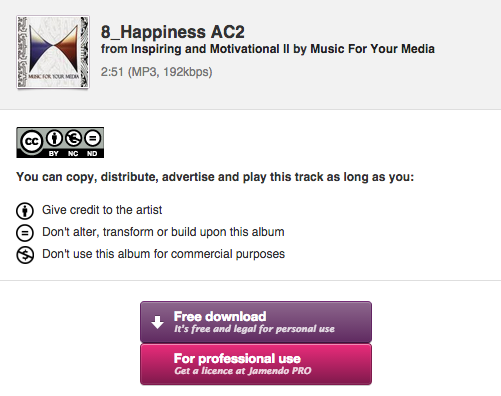
b) For education, the best type of license is a CC-BY or a CC-BY-SA. These are the only two CC license types that are classed as "Culturally Free", meaning that they allow real sharing, reuse and remixing by others. Adding the well-intentioned NC (Non Commercial) or ND (No Derivatives) to a CC license can still make it difficult for people to use your stuff easily and legally, and in some ways are almost as restrictive as full copyright. There are obviously places and situations for all six of the various CC license types, but for education and to allow real freedom to share, BY or BY-SA are the best ones.
Whatever terms you decide to use (although I'd encourage you to use the most free - libre - license you can) please mark your work - worksheets, powerpoints, IWB presentations, videos, etc - with something to let downstream users clearly know what they can and can't do with your work.
Popularity: 16% [?]
Podcast: Play in new window | Download (Duration: 2:50 — 3.3MB)
Why Creative Commons?
Although I've not managed to keep up fully with the Open Content Licensing for Educators course being run by the WikiEducator group this week, I have managed to spend enough time with to do a bit of thinking about copyright, Creative Commons, and what all this stuff means to me as an educator. The course has been a good introductory overview of these issues, although I was already fairly aware of much of the information being shared. The real value was in connecting with other educators from all over the world and hearing so many different perspectives on how traditional copyright can be so debilitating, especially in the developing world.
I certainly don't claim to be an expert on this copyright law stuff, but I have been taking a keen interest in the work of the Creative Commons folk for quite a while now and I try to take every opportunity to promote the benefits of the Commons. Reading through the forums, it's clear that this hasn't been the case for everyone, and it's been great to see so many interested educators taking their first steps towards knowing more about CC and OER, and sharing ideas on how it can benefit them. As an exercise in spreading the excellent work of Creative Commons, the course appears to have been a great success.
Because I feel like I'm coming at the course content from a slightly different perspective, I decided to make this short video as a summary reflection on what Creative Commons means to me. It was prompted by a comment by Wayne Mackintosh in the previous post on this blog, where he pointed me towards a similar reflection video by Justin Cone, the producer of the Building on the Past video. As someone who has been pushing CC for a while, I thought it would be appropriate for me to take the opportunity to capture a few thoughts about it.
I'd love to read some comments about how Creative Commons has made a difference to what you do as an educator.
Popularity: 19% [?]
Becoming More Open

One of the things I feel quite strongly about is encouraging the responsible sharing of educational content through appropriate open licenses. There are lots of problems created by traditional copyright, and anyone who works in a school knows just how silly the copyright rules can be at times. While I understand the need for content creators to protect their work from being stolen and to protect their right to make a living, there are many times when the rules imposed by traditional copyright just seem completely absurd.
I've pushed the idea of Creative Commons for a number of years now, and I try to make sure that everything I produce is published under a CC license. I want to share by default, not by exception, and I can't help but imagine what a better world we'd live in if everyone did the same. It's so ironic that so many teachers are the most blatant abusers of copyright, yet feel so affronted when it's suggested that they license their work in a way that might allow others to use it freely.
For quite a while now I've put a Creative Commons Attribution, Non-Commercial, Share Alike license (or CC BY-NC-SA) on this blog (and most of the other sites I publish). I originally decided on that license type because it seemed logical to me... it implied that you can use my work without the need to seek permission so long as it was attributed to me, you didn't restrict others from also taking it from you, and you didn't make money from it. It seemed logical.
Tonight, as part of the Open Education Content for Educators course I'm doing with the Wikimedia Educators group, I read an article called The Case for Free Use: Reasons Not to Use a Creative Commons -NC License. I'd heard other people talk about why, for educational purposes, it's a good idea to not include the Non-Commercial limitation in a CC license, but I'd always included it anyway because, while I'm happy to share, there's a part of me that doesn't really want to see other people getting rich off my work. However, I've realised that including the -NC limitation raises a whole lot of other issues that I hadn't considered, and may actually make it harder to use my work than traditional copyright. I don't want that. I want to be able to share freely, and to allow anyone to make use of what I create and write.
The use of an -NC license is very rarely justifiable on economic or ideological grounds. It excludes many people, from free content communities to small scale commercial users, while the decision to give away your work for free already eliminates most large scale commercial uses. If you want to obtain additional protection against large scale exploitation, use a Share-Alike license. This applies doubly to governments and educational or scientific institutions: content which is of high cultural or educational value should be made available under conditions which will ensure its widespread use. Unfortunately, these institutions are often the most likely to choose -NC licenses...
...Recognizable and genuine free content communities can only evolve around the principle of true freedom. You have the chance to send a clear message whenever you license your own works. You have the chance to be heard, amplified by the voices of free content supporters around the planet.
For this reason, I've decided to remove the -NC requirement and change the Creative Commons licence on this blog to a CC BY-SA licence.
If you also publish work under a Creative Commons license, I'd encourage you to have a read of this article and consider opening up your content to help build a freer, more open world.
As an aside, one of the conversations we are having at my school at the moment is about changing our mindset about the content we create, and perhaps making everything we do available under an OER or Creative Commons license. For a large independent school like ours this is a big step, since in many ways, our content is a valuable commodity and is part of the reason that parents send their children to our school. Some would view it as our competitive advantage, and the notion that we might make it freely available is seen by some as crazy. But nonetheless, we are serious about investigating ways to license what we create as Open Educational Resources and to look at lifting that ridiculous rule that says everything you produce while at school is copyright owned by the school, not the teacher. We want to find ways where it can be used freely by both. I have no idea just where this discussion will end up, and just how open and free we might be able to make things, but for a school like ours it's wonderful to seethat we are even having the conversation.
PS: If you have a WordPress blog, you might like to use the Creative Commons Configurator, a free WordPress plugin that adds both human and machine readable information to your posts. It's super easy to use, and is one of my favourite WP plugins.
If you use Microsoft Word, there is also a free add-in you can install called the Creative Commons Add In for Microsoft Office. It adds a button to the ribbon that lets you include a CC license of your choice to any printable document. If you must use Office, it's a nice add-in to have.
Popularity: 16% [?]
Lessons from the Conservative Right
And this, ladies and gentlemen, is why Larry Lessig is one of my heroes. This is a terrific video that ought to make you very angry (or at least, damn annoyed!)
The question is, what will you do about that anger? Are you in this fight? And what part are you, as a modern educator, playing in creating this important reform?
Recorded at TEDxNYED
Popularity: 3% [?]
Copyright or Copywrong?
I was in a staff meeting at school last week where we were given a presentation outlining 10 common myths about copyright. I thought it not a bad summary of what many teachers just assume to be true. Ironically, I'm reproducing it below basically word for word as it was presented to me, but I'm told on good authority that the original creator has authorised its use for reposting.
The other thing I really would have liked to have had included in the conversation was a little more talk about what the alternatives are. It's one thing to talk about what you can't do legally, but unless you provide a list of workable alternatives, simply making "though shalt not" pronouncements is a bit pointless. Copyright has a place, but in a digital world that place is changing dramatically. There is an obvious tension between the inputs and the outputs of copyright... if you are a content creator, you want the output of your work to be protected so others don't simply steal your stuff, however, unless you can borrow and remix content from others, you will have very little to work with in the first place.
If you've not seen it, take a look at an amazing comic book produced by the Center for the Study of the Public Domain at Duke University. Issue 1, entitled Bound By Law, looks at the copyright issues faced by documentary filmmakers, and is an extremely insightful look at the pros and cons of copyright and how it can often unintentionally stifle the very same creativity it is supposed to be protecting. I think it explains it very well, and it should be read by all high school students (and teachers!). You can download a copy (Under a Creative Commons licence of course) from www.law.duke.edu/cspd/comics.
For another lucid overview of the real issues behind copyright law, you really can't go past the TED Talk by Larry Lessig (founder of Creative Commons) called How Creativity is Being Strangled by the Law. His final summation of the tensions that exist between the extremist viewpoints of "Let's protect everything" vs "Everything should be free" is excellent, and he makes it very clear that, while the law might not be the ass we sometimes think it is, the notion of copyright certainly needs a good injection of balance and common sense if it is to remain relevant and workable.
Anyway, for what it's worth, here are the 10 myths about copyright, as presented by my school last week (and specifically applied to Australian copyright law)
1. It’s OK – I found it on the net
The fact that something is on the internet doesn’t mean that it’s not protected by copyright or that you can use it as you wish. Material on the net is protected to the same extent as anything on paper or in any other type of format. In many cases, however, copyright owners put a statement on to websites stating how people can use the material – the permission they give can often be quite extensive, but don’t assume that it will cover what you are planning to do with the material.
2. We can use it – it doesn’t have a copyright notice on it
While it is recommended copyright owners should put copyright notices on their material, it is not compulsory, and it doesn’t affect whether or not something is protected. We will have a compliance issue to deal with whether or not the material has a copyright notice on it.
3. We’re non-profit so it’s OK
In some narrow cases, the non-profit statues of an organisation can affect its ability to rely on exceptions. However, there is no general rule to the effect that it’s OK to use copyright material for non-profit purposes.
4. It’s all right we’re attributing the creator
If you’re using copyright material, you do generally have to attribute the person or people who created the material. This is a general moral rights obligation. However, you’ll still have copyright issues to consider; attributing the creator doesn’t change this.
5. We only need to worry about copyright if we’re charging money
In some narrow cases, the fact that an organisation is charging money can affect its ability to rely on exception to the general rule that you need permission if you want to use copyright material in one of the ways reserved to the copyright owner. However, there is no general rule to the effect that you don’t have to worry about copyright if you’re not charging people for the material you are using.
6. The copyright owner should see this as good promotion
Whether or not a copyright owner sees your use of their material as good promotion is their decision, not yours, and you can never be sure they’ll see the situation in the same light as you do. Also, even if the copyright owner does see your use of the material as good publicity, don’t assume that this means that they’ll give you permission to use it for free. Many copyright owners make their living from the licence fees they charge, and they will often want to know beforehand how you want to use the material. If you don’t get a clearance when you’re supposed to, you’ve still infringed copyright – which may, for the College, work out as bad publicity.
7. It’s OK – I’m using less than 10%
There is no general rule that you can use less than 10% without permission. If you’re using any ‘substantial’ part of a copyright owner’s material – whether you’ve made changes to it or not – you’ll have to deal with the copyright issue. In the context, a ‘substantial’ part is any part that is important, distinctive or essential. It doesn’t have to be a large part to be ‘substantial’ in a copyright sense.
8. It’s all right – I’ve changed it
There are two common, but wrong, beliefs in this area. First, there is no general rule to the effect that it’s OK to use copyright material if you change it by 10% or more. Second, there is no general rule to the effect that you can use copyright material if you make five or more changes. As noted above, if you’re using any part that is important, distinctive or essential, you have to deal with copyright issues.
9. It’s OK – we paid for it
The fact that the College paid a contractor for something – such as a report or a series of photos – will have a bearing on how we can use it. However, this is not by itself a guarantee that we own copyright in it, and can use it as we like. Similarly, the fact that we own a physical item – such as a painting or photograph or a DVD – does not mean you can use it as you like (such as copying it or screening it).
10. No one will ever find out
If you know, and your colleagues know, why mightn’t the copyright owner – or the collecting society that represents them – get to find out too? Organisations that infringe copyright are always at risk from disgruntled employees, let alone the other people they come in contact with. Also, copyright owners have six years to take action for an infringement – that’s a long time for information to come to light.
Popularity: 1% [?]
Better than Stealing
The Internet has made it easier than ever to find virtually any digital resource we might want. The ability to locate, download and use a piece of music, a passage of text, a video or a photo for our own use is so trivially easy to do that in the excitement of knowing we CAN do it, we sometimes overlook the question of whether we SHOULD do it. The idea of the Internet as a place where things are freely shared has become so much a part of our thinking that we sometimes believe we have a right to reuse whatever resources we happen to find online.
One of the casualties of this cavalier approach to sharing can be a loss of respect for the intellectual property of others. In a world where everything appears to be so freely available, it is easy to overlook the fact that someone, somewhere, owns these resources. We tend to rationalise our use of them, reasoning that if people put them on the Internet they must be willing to share them. And that’s not always true. Some people do not want you to take their work without asking.
On the other hand, some people ARE prepared to share their work. There are many who would be thrilled to think that someone wanted to look at their pictures, listen to their music or read their writing. The problem is that we don’t always know the author’s intentions. It would be nice to be able to tell, clearly and unambiguously, what the terms and conditions are for using their work.
This is precisely what Creative Commons sets out to do. Creative Commons is a set of conditions that clearly outlines the terms under which an author will allow their work to be used. All CC licences require attribution, or some acknowledgment of the author, usually with a link back to the original work. They provide a distinction between commercial and non-commercial uses, allowing the author to choose whether they will allow someone else to use their work to make money or not. CC licences also provide options for whether the work must be used exactly as is, whether it can be edited, adapted and remixed, and can also stipulate that a work must be shared under the same conditions as it was made available.
Applying a CC license to your work is easy. The Creative Commons website, found at www.creativecommons.org, provides a couple of simple questions to define the conditions under which author is prepared to publish their work, and then generates badges, computer-readable code and an easy-to-understand license document. It’s a very simple process that will help make it much clearer to anyone who wishes to use the works exactly what they are legally able to do with them.
The huge benefit for educators is the removal of the many barriers created by traditional copyright. Teachers are able to locate thousands of CC digital resources that can be freely used with students without worrying about violating copyright or interpreting the often vague “fair dealing” law. These digital resources can be used, remixed and, most importantly, republished back to the web, all without fear of a copyright violation since the terms of use are clearly and explicitly stated upfront.
Of course, not every resource will be available under a Creative Commons license, so students still need to be taught about traditional copyright and the responsibilities that accompany it. If suitable resources are not available under CC, and permission cannot be sought for its use, then all the usual copyright restrictions still apply. However, Creative Commons offers a viable alternative for the legitimate remixing of digital media, while providing an excellent environment in which to frame discussions with students about the legal and ethical responsibilities of being a good digital citizen.
This article was written for, and recently published in, Australian Teacher Magazine
Popularity: 1% [?]